When the United Nations declared 2023 the International Year of Millets, much of urban India responded with a mild, polite confusion. Millets? Aren't those for birds?
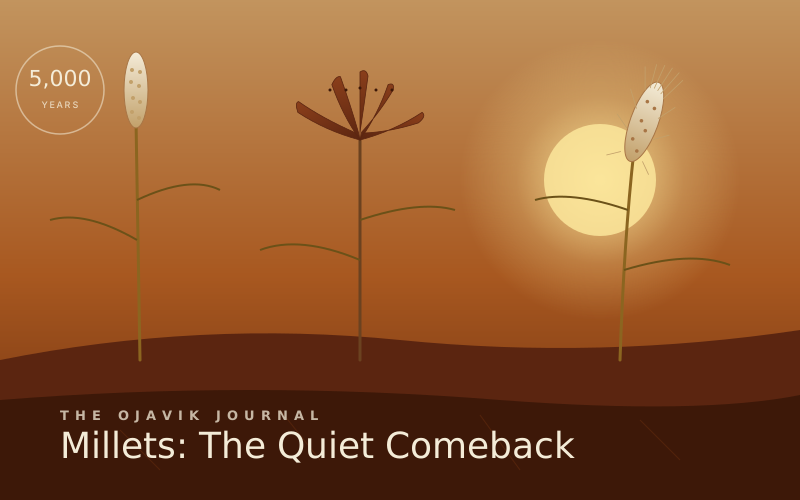
Two generations ago that question would have been unthinkable. The smallholder farms of the Deccan and the Western Ghats grew foxtail, finger, pearl and little millet long before they grew rice. Ragi mudde was the everyday food of Karnataka. Bajra ki roti was the winter staple of Rajasthan. Cholam, kambu, varagu — each a Tamil word for a different millet, each its own way of eating well in a dry land.
What changed
The Green Revolution did. Subsidies, water and procurement policies all flowed towards wheat and rice. Millets, which need a fraction of the water and survive in the most marginal soils, became uneconomic to grow. By the year 2000, India's per-capita millet consumption had fallen to less than a third of what it was in 1960.
Why they are coming back
Three reasons, in order of how often we hear them. First: the dietary one. Millets are naturally gluten-free, rich in dietary fibre, calcium, iron and magnesium, and they have a low glycaemic index. For the diabetic, the gluten-sensitive, or anyone trying to eat less of the refined-carbohydrate staple, millets simply work.
Second: the agricultural one. As groundwater tables in Punjab and Haryana fall, climate models converge on the same uncomfortable conclusion — the basket of crops that fed India for the last fifty years cannot continue at this scale. Millets, hardy and rain-fed, are part of the answer.
Third: the flavour. Once you have eaten a properly roasted bajra roti with white butter, a ragi malt on a winter morning, or a foxtail-millet pulao with kerala curry leaves — the question stops being whether to eat millets and becomes which one tonight.
Millets are an answer to a question we forgot we were asking.
The Ojavik blend
Our millet pack is a three-grain blend in equal parts: foxtail millet (kangni) for its mild, almost sweet finish; pearl millet (bajra) for body and protein; and finger millet (ragi) for its deep, malty calcium-rich profile.
Cook them together as you would rice — one cup of millets to two and a half cups of water, twenty-five minutes — and you have a side dish that pairs with everything from a south Indian sambar to a north Indian dal.
Three ways in
- The easy start — replace half the rice in your next pulao with our millet mix. Same cooking time, twice the fibre.
- Breakfast — a tablespoon of ragi flour in your morning porridge transforms it from beige to brick-red and from light to filling.
- Bajra roti — knead bajra flour with hot water and a little salt, roll between palms (not a rolling pin), and cook on a hot tawa until it puffs.
Written by Meera Iyer · Published 24 April 2026